ReleaseTwin
Self-serve release-proof testing. Sign up to get an API token and see your uploaded run history.
One loop, on every pull request
A change opens a PR. ReleaseTwin runs your cases in your own runner and reports back. Here it catches a regression, blocks the merge, then goes green on the fix — real output from a real run.

It's a real merge gate — a failing check you make required, the same as unit tests.
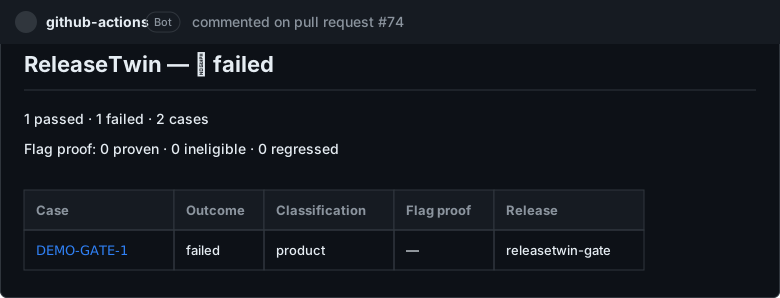
The verdict is readable — totals, flag-proof, and the notable cases, updated in place on every run.

Push the fix and the same check goes green — the comment updates in place, no new noise.
Connect the hosted dashboard and each run's history and redacted evidence lands there too — only metadata leaves your infra.
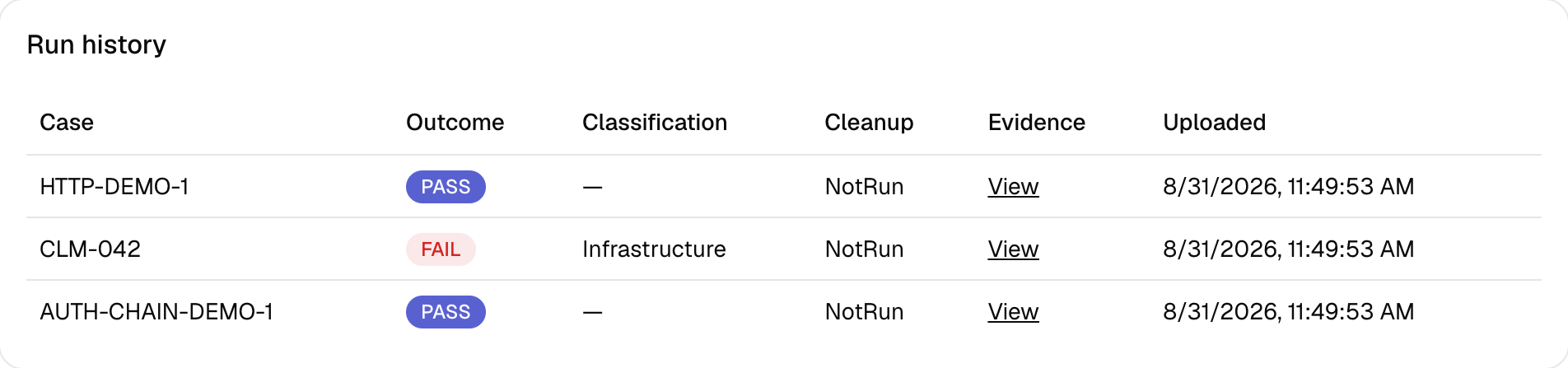
Every run's history lands on the dashboard — pass/fail, your classification, and a link to the evidence.
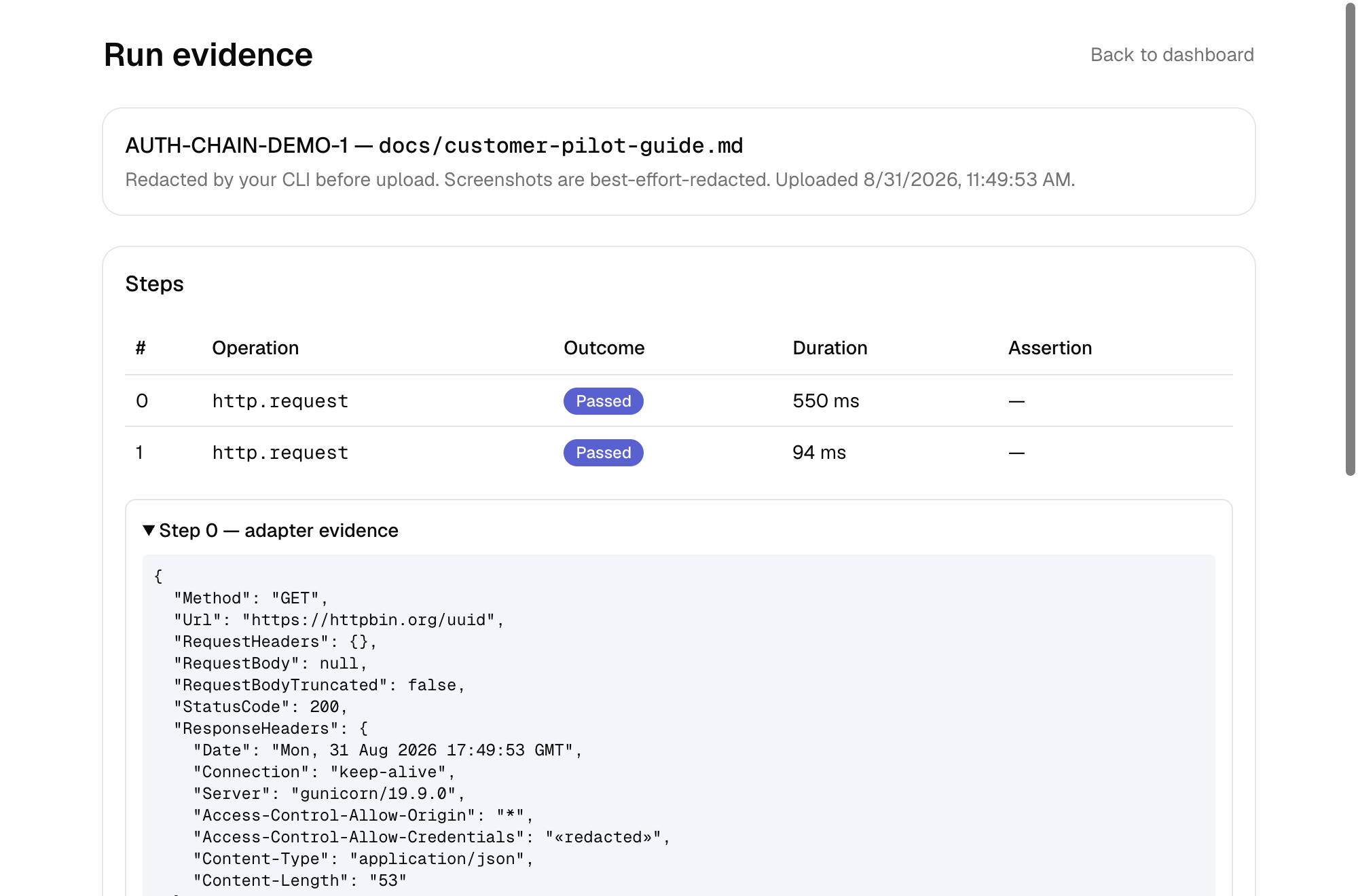
Open a run and you get the request/response of every step — with credential-shaped fields stripped in your CLI before anything is uploaded.
Your data stays put
Built for integration-heavy teams who can't send their test data to a vendor. Nothing here asks you to.
Execution stays in your infra
The CLI runs on your machine or in your CI. The hosted platform is a control plane — accounts, tokens, dashboard — never a test runner.
Only metadata leaves, by default
Case ID, oracle reference, fixture hash, pass/fail, classification. Never fixture content, response bodies, or credentials — the ingest contract has no field for them. We're independent and self-funded, so our incentive is your renewal, not your data.
Redaction runs in your CLI
Evidence upload is opt-in and per-project. Auth headers, credential-shaped fields, and resolved secrets are stripped before the socket opens — in code you can read.
What the hosted dashboard adds
On top of the open-source engine. See the full features list for every capability and its tier.
Evidence viewer
Per-step request/response summaries, assertion detail, and UI screenshots — redacted in your CLI before upload.
Hosted project secrets
Store credentials once per project; the CLI fetches them wherever it runs, instead of per-runner env vars.
Trend analytics
Pass/fail and flake trends across a project's run history.
Custom redaction rules
Your own allow/deny rules layered on top of the built-in credential redaction.
Try it against your own API
The HTTP example needs no credentials. Run it, then point a case at your own endpoint. Connect the dashboard when you want run history.
We're working hands-on with a small number of design partners. Founding customers lock their pricing and get direct access to the person building it.